
Knowledge base / Essays & Ideas / Physics, science & the cosmos
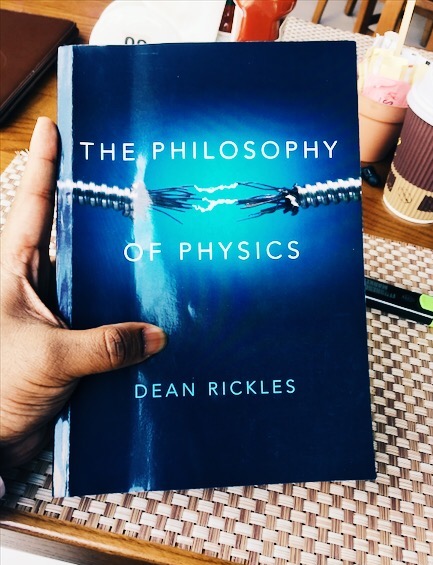
The Philosophy of Physics
Philosophers of Physics | Physics | Books
The core idea in plain words
Physics is the most successful thing human beings have ever done. With a few pages of equations we can land a probe on a comet, build a GPS that corrects for relativity, and predict the magnetic moment of the electron to about one part in a trillion. And yet, if you ask a room of physicists what those equations are telling us about reality, you get a fight.
The philosophy of physics lives in that gap. It takes our best theories and asks: if this theory is true, what is the world made of, and how does it hang together? Four questions keep coming back:
- What is time? Why does it seem to flow, and why does it have a direction?
- What is space? A container, or just a web of relations between things?
- What happens in a quantum measurement? Does the world split, collapse, or was the answer there all along?
- What is probability? Ignorance on our part, or chance built into nature?
An analogy: the rulebook of chess
Suppose aliens watch a thousand games of chess and work out the rules perfectly. They can predict every legal move. Have they understood chess? Not quite. They don’t yet know whether the pieces are wood or pixels, whether the players are people or programs, or why anyone plays. Knowing the rules is not the same as knowing the game.
Physical laws are our rulebook. The philosophy of physics is the attempt to find out what the pieces are.
A worked example: the arrow of time
The fundamental laws of physics — Newton’s, Maxwell’s, Schrödinger’s — work the same forwards and backwards. Film two billiard balls colliding, play it in reverse, and nothing looks wrong. Yet film an egg smashing and play it backwards, and everyone laughs. Where does the difference come from?
The usual answer runs through entropy. Boltzmann’s formula says
where is the number of microscopic arrangements that look the same from the outside. A whole egg has relatively few arrangements; a splattered egg has astronomically many. So almost any random nudge takes the egg from “whole” to “smashed” and almost none take it back. That gives us the second law: entropy tends to rise.
But here is the philosopher’s catch. The same counting argument works backwards in time. If you only use probability, you should conclude the egg was more likely to have been smashed yesterday too, spontaneously assembling into an egg just now. That is absurd. To block it, you need an extra assumption: the universe began in an extraordinarily low-entropy state. David Albert calls this the Past Hypothesis.
So the arrow of time — why you remember yesterday but not tomorrow, why causes come before effects — may not be in the laws at all. It may be a fact about the Big Bang. That is a philosophical conclusion squeezed out of a physics formula, and it is exactly what this subject does. See Physics and Chance for more.
The quantum measurement problem, briefly
Quantum mechanics describes a system with a wavefunction that evolves smoothly under the Schrödinger equation. But when we measure, we always see one definite result, with probability given by the Born rule, . Smooth evolution and sudden definite outcomes don’t obviously fit together. The main responses:
- Copenhagen — don’t ask what happens between measurements.
- Collapse theories (GRW) — the wavefunction really does collapse, spontaneously, now and then.
- Pilot wave (Bohm) — particles always have positions; the wave guides them.
- Many worlds (Everett) — nothing collapses; every outcome happens in its own branch. See The Everett Picture.
- QBism and relational views — the wavefunction describes an agent’s information, not the world itself.
All of them reproduce the same experimental predictions so far. Choosing between them is, for now, a philosophical decision — about simplicity, about what you are willing to call real.
Common misconceptions
- “Relativity says everything is relative.” It says the speed of light and the spacetime interval are the same for everyone. It is a theory of invariants.
- “Quantum mechanics says consciousness creates reality.” A minority view. Most interpretations need no minds at all.
- “Uncertainty is about clumsy measurement.” It’s built into the mathematics: a state with a sharp position simply has no sharp momentum.
- “This is all untestable navel-gazing.” Bell’s inequality began as a philosophical question about Einstein’s worries and ended as a Nobel Prize in 2022.
Connections
- Philosophers of Physics — the people behind these arguments.
- The Road to Reality — Penrose’s big tour of the mathematics.
- Quantum Reality, After Physics, Physics and Narrative — book notes.
- Philosophy in Physics — the philosophy section’s angle on the same ground.
- The Laws of Physics — the rulebook itself.