
Swahili: Start Here
Practise: Swahili flashcards and quizzes (works on any phone).
Core lists: vocabulary by theme · everyday phrases · example sentences
I travelled to Tanzania for the first time in 2019. It’s been a few years now, but I thought it would be great to learn a little Swahili for whenever I go back. This page is the front door: what the language is, how it sounds, how it is built, the phrases to learn first, and then a numbered path through everything else on the site.
The plain idea
Swahili (Kiswahili, “the language of the coast”) grew up over a thousand years along the East African coast, where Bantu-speaking communities traded with Arab, Persian and Indian merchants across the Indian Ocean. Its grammar is thoroughly Bantu; its vocabulary is rich in loanwords, especially from Arabic (kitabu, book, from kitāb; habari, news, from khabar), and later from Portuguese, English and others. The name itself comes from the Arabic sawāḥil, “coasts”.
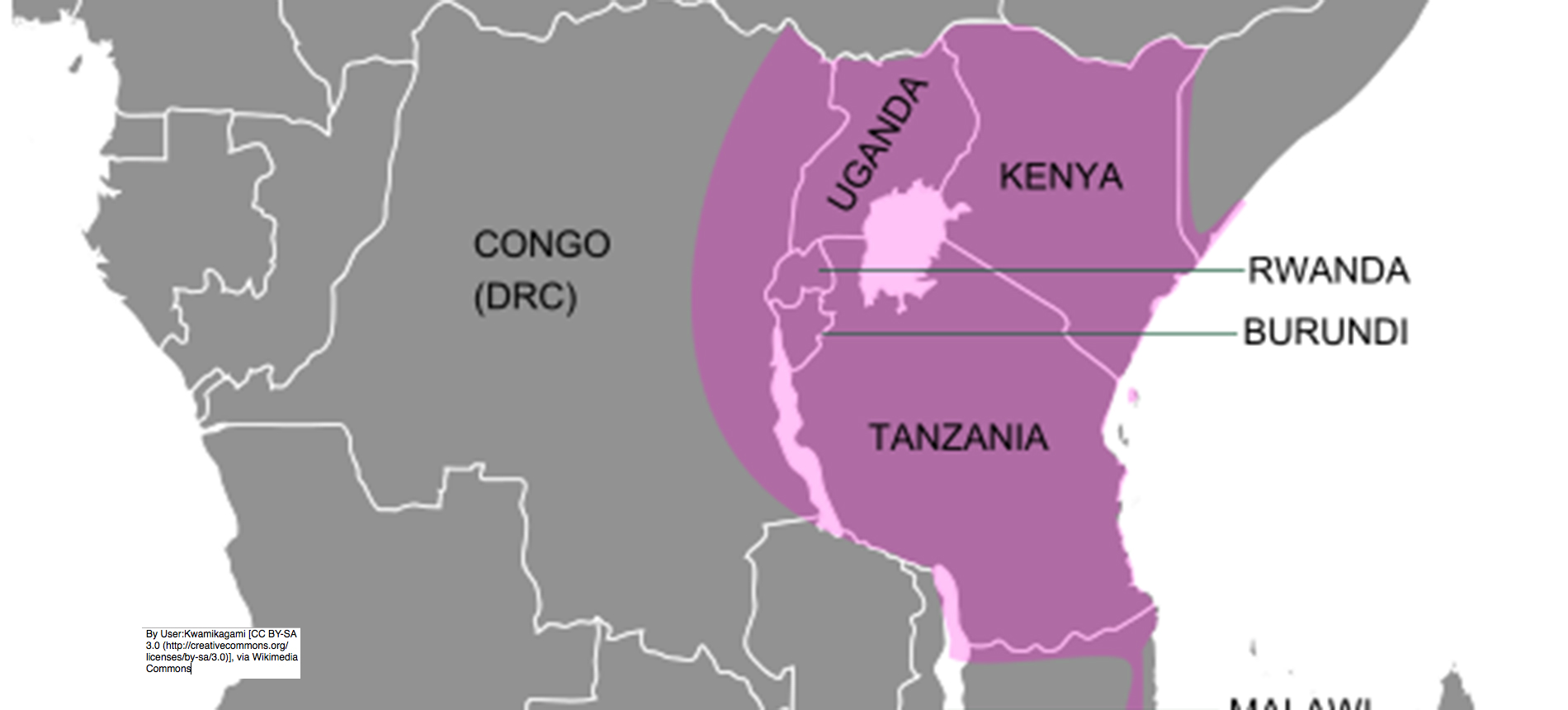
Today it is the most widely spoken language of sub-Saharan Africa: estimates range from around 100 to over 200 million speakers, most of whom learned it as a second language. It is a national or official language of Tanzania, Kenya, Uganda, Rwanda and the Democratic Republic of the Congo, and an official language of the African Union and the East African Community. Since 2022 UNESCO has marked 7 July as World Kiswahili Language Day.
1. Alphabet and pronunciation
Swahili uses the Latin alphabet and is spelled almost exactly as it sounds. There is no q or x, and c only appears in ch.
| Letter(s) | Sounds like | Example |
|---|---|---|
| a | a in “father” | baba father |
| e | e in “bed” | wewe you |
| i | ee in “see” | mimi I |
| o | o in “more” (short) | moto fire |
| u | oo in “food” | tu only |
| ch | ch in “church” | chai tea |
| dh | th in “this” | dhambi sin |
| th | th in “think” | thelathini thirty |
| gh | a gargled g (like French r) | ghali expensive |
| ng' | ng in “singer” | ng’ombe cow |
| ny | ñ in Spanish “niño” | nyumba house |
- Every vowel is pronounced, and always the same way: ma-ji, ka-ri-bu.
- Stress falls on the second-to-last syllable: ka-RI-bu, a-SAN-te, ha-BA-ri.
- An m or n before a consonant can be a syllable on its own: m-tu (person), n-chi (country).
2. How it works: words built like Lego
Swahili is agglutinative: verbs are built by snapping prefixes onto a root. Take the root -soma, “read, study”:
| Swahili | Pieces | English |
|---|---|---|
| ninasoma | ni + na + soma | I am reading |
| unasoma | u + na + soma | you are reading |
| anasoma | a + na + soma | he/she is reading |
| nilisoma | ni + li + soma | I read (past) |
| nitasoma | ni + ta + soma | I will read |
| nimesoma | ni + me + soma | I have read |
| sisomi | si + som + i | I don’t read |
Learn the subject markers (ni, u, a, tu, m, wa) and the tense markers (na present, li past, ta future, me perfect), and every new verb gives you hundreds of sentences. The full tables are on Swahili: Basic Grammar.
Noun classes: the big surprise
Instead of masculine and feminine, Swahili sorts nouns into noun classes, each with its own singular and plural prefix, and the prefix echoes through the sentence:
- m-/wa- (people): mtoto child, watoto children
- ki-/vi- (many things): kitabu book, vitabu books
- m-/mi- (trees, plants, some objects): mti tree, miti trees
“The child is reading” is mtoto anasoma; “the children are reading” is watoto wanasoma. The verb agrees with the class. Think of noun classes as colour-coded cables: plug a blue noun in and every word that connects to it needs a blue end.
3. Essential phrases
| Swahili | English | Notes |
|---|---|---|
| Hujambo? | How are you? | literally “you have no matter?” |
| Sijambo. | I’m fine. | “I have no matter” |
| Hamjambo? / Hatujambo. | How are you all? / We are fine. | plural forms |
| Habari gani? | How are things? | literally “what news?” |
| Nzuri (sana). | Good (very good). | the standard reply |
| Shikamoo. / Marahaba. | (respectful greeting to an elder) / (the elder’s reply) | |
| Jina lako nani? | What is your name? | |
| Jina langu ni … | My name is … | |
| Nimefurahi kukuona. | I’m glad to see / meet you. | |
| Karibu (sana). | Welcome; you’re welcome. | |
| Asante (sana). | Thank you (very much). | |
| Tafadhali. | Please. | |
| Samahani. | Sorry, excuse me. | |
| Ndiyo / Hapana. | Yes / No. | |
| Sielewi. | I don’t understand. | |
| Kwaheri. / Kwaherini. | Goodbye (to one / to several). |
More are on Swahili: Greetings and Essentials and Swahili: Everyday Phrases.
Common misconceptions
- “Swahili is a mix of Arabic and African languages.” Its structure is Bantu through and through; Arabic contributed vocabulary, not grammar.
- “Hakuna matata is a common everyday phrase.” It’s genuine Swahili (“no problems”) but far more common in tourist contexts than in daily conversation; hakuna shida is often heard.
- “There’s one standard everyone speaks.” Standard Swahili is based on the Zanzibar dialect, but Kenyan, Tanzanian and Congolese varieties differ, and Nairobi’s youth slang Sheng mixes in English.
The learning path
- Swahili: Start Here (you are here)
- Swahili: Greetings and Essentials
- Swahili: Basic Grammar
- Swahili: Vocabulary
- Swahili: Everyday Phrases
- Swahili: Reading 1 – Jane and Tom
- Swahili: Reading 2 – The Farmer and His Donkey
- Swahili: Everyday Phrases
- Swahili: Example Sentences
Karibu sana. The truth revealed: Swahili is a language built for meeting strangers, which is exactly what it has been doing for a thousand years.