
Philosophy | Economics | Politics | Ethics | Aesthetics
Ludwig Wittgenstein
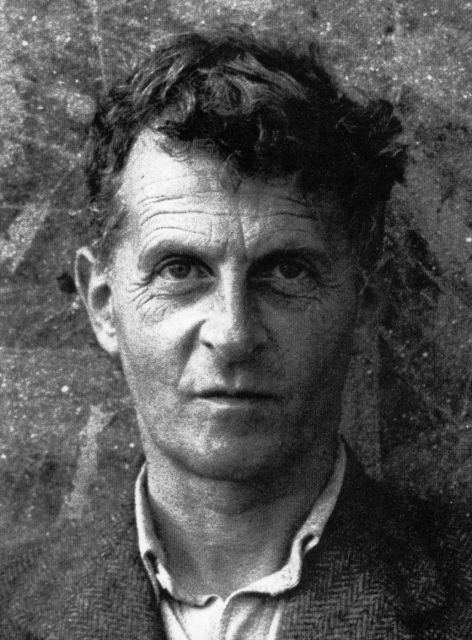
  Wittgensteins's Tractus may be called a synthesis of the theory
  of truth-functions and the idea that language is a picture of
  reality.

  Out of this synthesis arises a third main ingredient of the book,
  its doctrine of that which cannot be said, only shown.

  Ludwig Wittgenstein A Memoir by Norman Malcom
Date: 30/11/2016
He had a habit of writing thing down in note books. Like him, I too have a scattering of note books but unlike him, mine are not so organised or dated. There is a beauty to note taking. Something in it that sharpens the mind. It makes you think with greater precision and clarity and acts as a reference at future dates often bringing back more than what is immediately written down.
Wittgenstein was a friend and contemporary to:
- Bertrand Russell
- Frege
- G.H. Hardy
- G.E. Moore
- A.N. Whitehead
- J.M. Keynes
He was also influenced by:
- Schopenhauer
- Spinoza
- Tolstoy
- The Gospels
After the death of his father in 1912, Wittgenstein inherited a fortune. He promptly gave it all away, choosing a life of extreme simplicity and frugality. Despite choosing this life, I find his life most fascinating. Wittgenstein fought in The Great War, he was a gifted musician, conductor, an artist, architect, sculptor and more. He was member of the Royal Society and the chair of Philosophy in Cambridge.