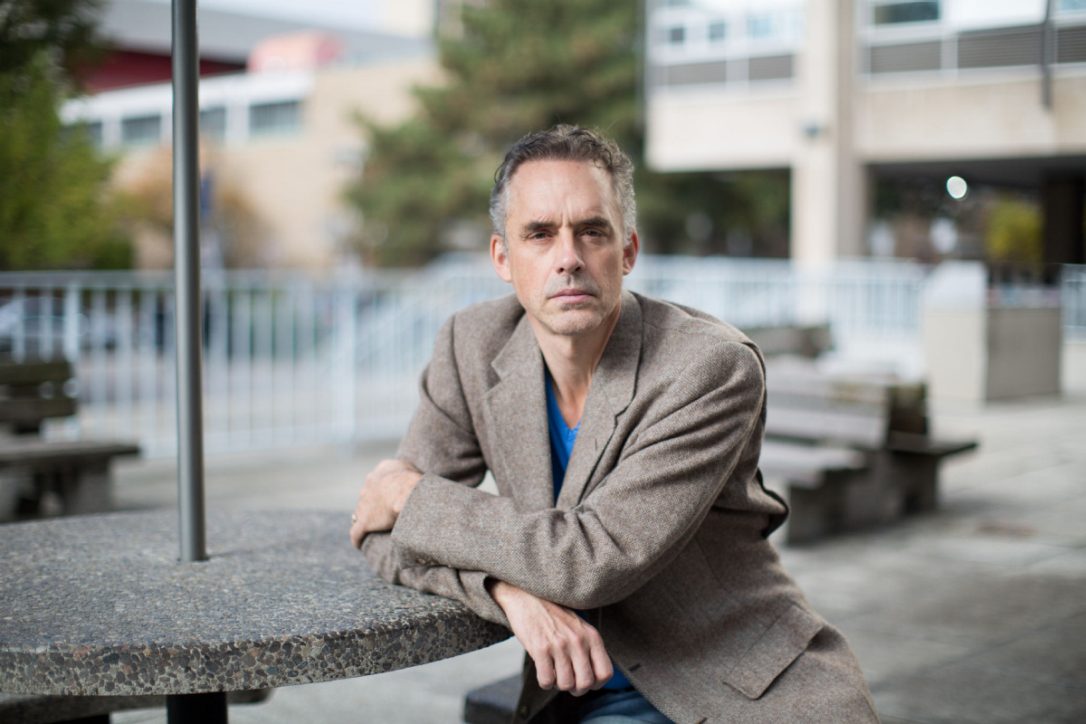
Maps of Meaning | Philosophy | Psychology
Jordan B. Peterson
Date 7th December 2016
Jordan Peterson is a Clinical Personality Psychologist. I am currently in Jordan Peterson mode. I get into these kinds of voracious moods whenever I find a new thinker that I admire or I am fascinated by. Some years ago it was Christopher Hitchens, Krishnamurti, etc… even before that it was Mandela, Ghandi, Swami Vivekananda, etc… More recently it was Daniel Dennet, Sam Harris, Stephan Molyneux, etc… Personality de jour is Jordan Peterson.
I love his psychoanalytic, mythic-religious observations of culture and its effects on todays world, where we came from and where we’re going. What I love about his thinking is how orginal/unique it is amongst living philosophers.
Who he is
Jordan B. Peterson (born 1962 in Alberta, Canada) is a clinical psychologist who taught at Harvard and then for many years at the University of Toronto. He became world-famous in 2016 when he opposed Canada’s Bill C-16 (which added gender identity and expression to human-rights law) on free-speech grounds, especially what he saw as compelled speech around pronouns. His lectures on YouTube, his appearances on podcasts like Joe Rogan’s, and his book 12 Rules for Life: An Antidote to Chaos (2018), which sold millions of copies, followed. Later books include Beyond Order (2021) and We Who Wrestle with God (2024). He co-founded the online Peterson Academy. From 2025 serious illness kept him largely out of public life and cancelled his 2026 UK tour; by mid-2026 he said he had resumed some writing.
The plain idea
Peterson’s central claim, developed in his first and most demanding book, Maps of Meaning (1999), is that the oldest stories humans tell are not primitive science but practical wisdom about how to act. Myths, religious narratives and fairy tales encode, in dramatic form, what generations learned about surviving in a world that is always part known and part unknown.
He pictures human experience as a constant movement between order (the familiar, the explored, your culture) and chaos (the unknown, the unexpected, everything that breaks your plans). The hero of countless stories is the person who voluntarily faces chaos, brings back something valuable, and renews order with it. For Peterson, that is not just a plot; it is a model of how to live, and of what consciousness is for.
Why it matters
- Meaning through responsibility. His most influential practical message, aimed especially at young men, is that a meaningful life comes less from happiness or rights than from taking on responsibility: “Set your house in perfect order before you criticise the world.” Many readers credit him with turning their lives around.
- Psychology meets religion. He draws on Carl Jung, Friedrich Nietzsche, Dostoevsky, Solzhenitsyn and evolutionary psychology to read the Bible and other myths as psychological documents. Whether or not you share his conclusions, it is an unusual bridge between secular science and religious tradition.
- Personality research. Before the fame he was a productive researcher on the Big Five personality traits, and he co-developed tools for assessing them.
- The culture war. He became one of the most prominent critics of what he calls postmodern neo-Marxism in universities, and one of the most polarising public intellectuals of his era.
An everyday analogy: the map and the territory
Think of your beliefs as a map. Most days the map works. Then something happens that the map doesn’t show: a job loss, a betrayal, an illness. That is chaos breaking in. You can deny the territory changed and keep following the old map off a cliff, or you can venture into the unmapped part, learn, and redraw. Peterson’s claim is that the dragon-slaying stories are about exactly this: the dragon is the unknown, and the gold it guards is the new knowledge you need.
A worked example: “Clean your room”
His most famous piece of advice sounds trivial, which is the point.
- The unknown is overwhelming, so start where your responsibility and power are clearest.
- A small ordered space is proof to yourself that effort changes the world.
- Success compounds: tidy room, then your schedule, then your relationships, then your contribution to your community.
- Moral upshot: earn the right to criticise large systems by first improving what is within reach.
That is the hero myth scaled down to a Tuesday afternoon.
The criticisms, fairly stated
- Philosophers and scholars have criticised his readings of postmodernism and Marxism as caricatures that lump very different thinkers together.
- Some psychologists and religious scholars think his Jungian readings of myth are speculative and unfalsifiable.
- His statements on gender, climate science and other topics have drawn strong objections, and in 2022 the College of Psychologists of Ontario ordered him to undergo coaching on professionalism in his public statements, and Ontario’s courts upheld the order in 2023.
- His evasiveness on whether he literally believes in God frustrates both believers and atheists.
Common misconceptions
- “He’s a philosopher of the right.” His intellectual roots are in psychology, Jung and existentialism; his politics are better described as classical liberal on speech and conservative on culture.
- “His message is just tough love.” Much of his work is about suffering, compassion and the danger of resentment.
- “Maps of Meaning is the same as 12 Rules.” Maps of Meaning is a dense academic work; 12 Rules is a popular self-help book built on it.
How it connects
- Maps of Meaning
- Philosophy and Teleology: purpose, myth and meaning.
- Aldous Huxley: another thinker of the inner life and the dangers of a comfortable society.
The truth revealed: whatever you make of the man, his question is worth keeping. What are you willing to take responsibility for?
Links
Jordan Peterson Site Jordan Peterson on Joe Rogan (YouTube Video) University of Toronto Free Speech Debate - Jordan Peterson