
Nolan’s Odyssey
Osmosis, Odysseus, and Other Casualties. The West, Seen in Stop Motion.
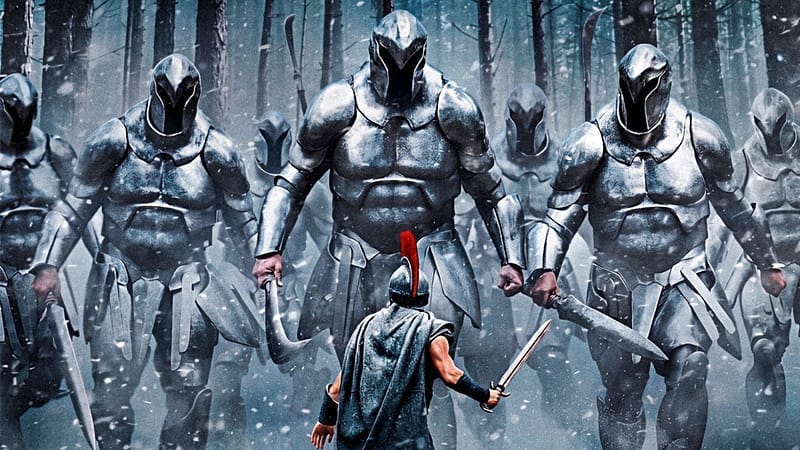
Vikid was not a particularly smart hero. He had tried to read The Iliad by Homer several times. It always started with the best of intentions: he would begin, get a few chapters in, realize he was completely lost, and then lose interest as some other shiny object took his attention.
He couldn’t remember the names of all the characters, or figure out which god was who, who had which kid, etc., etc…
He knew what it must feel like for anyone trying to penetrate the Hindu pantheon and myths, such as the Mahabharata. All the unfamiliar names, their complex relationships, stories that depend on other stories — a fractal kaleidoscope, impenetrable to all but those who grew up with it, like learning a foreign language.
But bearing these limitations in mind, Vikid had spent nearly two decades in the West, beginning in his adolescence, and thus, through osmosis, had imbibed the stories of Odysseus’s adventures.
Having spent his young years in rural England, and then reverse-immigrating out of the Isles back to the Middle East, gave him a unique perspective.
Just as you see abrupt changes in a growing child you don’t meet regularly — changes the parents miss because of their continuous contact — Vikid saw the changes in the West in twenty snapshots, over as many years. A jerky stop motion where change looks exaggerated.
What Vikid saw was a clear degradation.
Nolan’s Odyssey reflects this degradation.
It tries to be epic, it tries to break all the norms, to be some modern interpretation; it tries to be a technical marvel, shot in 70mm IMAX without computer-generated imagery. But to Vikid, it just looked like a washed-out mid-2000s blockbuster that failed.
The first crime of the movie is that it is terribly boring. It starts off well enough — the first twenty minutes lead you to think there might just be something here — but then the movie stagnates for the next two hours.
Helen of Troy and Menelaus:
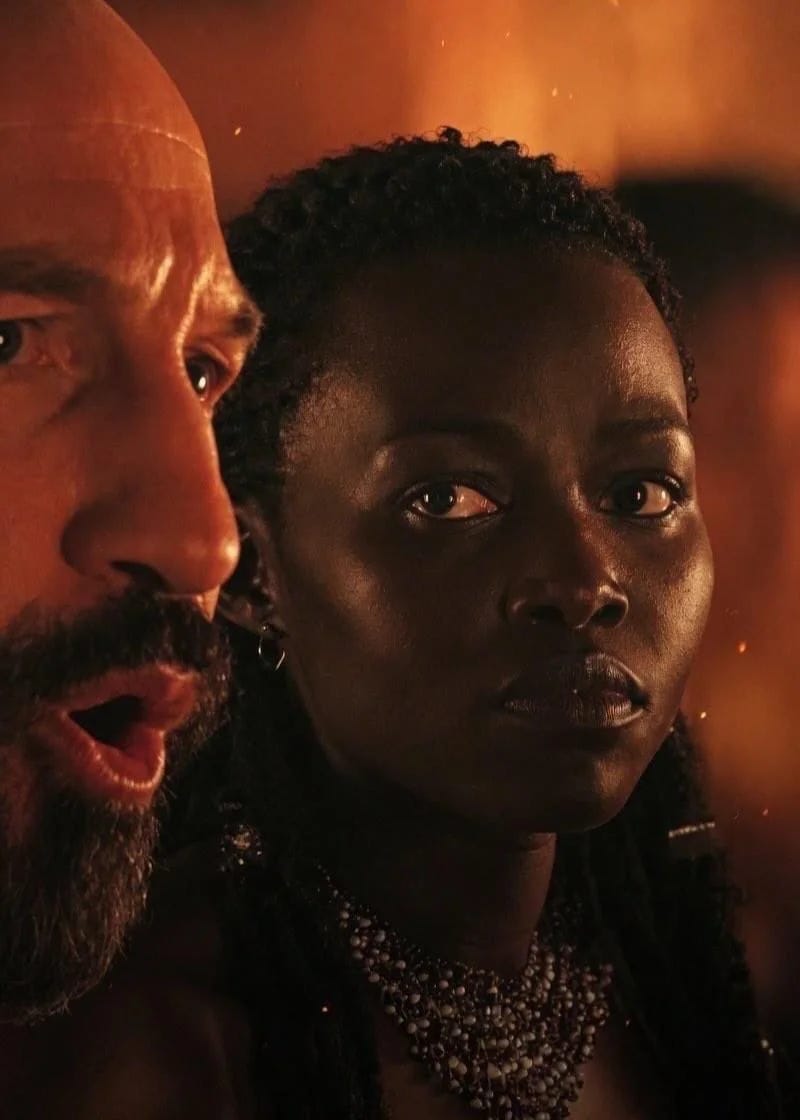
The second crime: all color and sound is muted. The movie is filmed through some teal-orange filter that one grows weary of quite quickly, like an endless nostalgia sequence in a daytime sitcom. The soundscape is similarly jarring. Just some kind of endless drumbeat and gongs. Not one identifiable tune.
To juxtapose: by some chance, Vikid had watched the first two installments of Peter Jackson’s The Lord of the Rings only a day before. You could not make two movies more different.
Jackson’s was a masterpiece, and we by now should call Nolan’s what it is: a piece of shit.
The last crime of Nolan: the story of The Odyssey is almost completely and utterly deconstructed and subverted.
How would Vikid know, having never read it?
Through osmosis. Like the original Greeks, who probably never read it either, but had their elders and bards tell them the stories. In the same way, he knew.
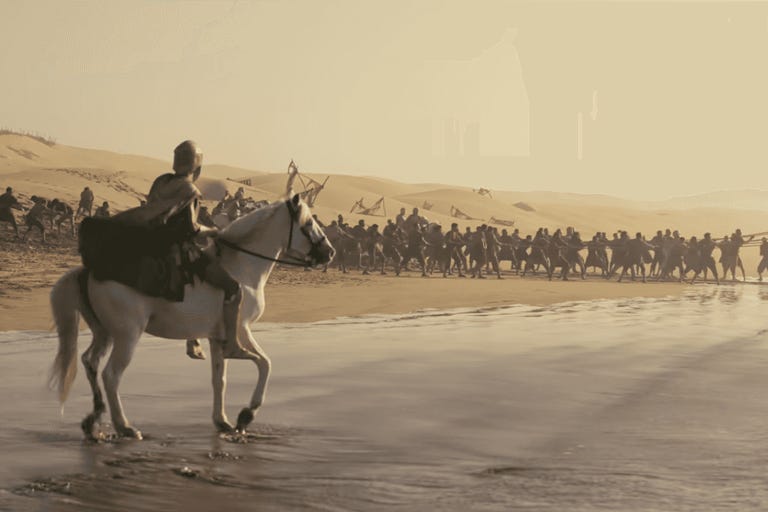
And that is the real degradation. Not the filter, not the drums. A civilization is its stories. The Greeks did not need to read Homer; the story lived in them, passed from bard to child, unbroken for a hundred generations.
Now the West takes its founding story — the man of cunning who endures everything to come home — and hands it back deconstructed, subverted, muted in teal and orange.
A civilization that can no longer tell its own story straight is telling you something different altogether. Beware…
Final Advice & Opinion
Wait till it comes on streaming if you are going to watch it at all.
And that’s,
The Vikid Truth
Thanks for reading! Subscribe for free to receive new posts and support my work.